AI-Ready MES for your Smart Factory

MES FLEX generates structured production data to form the basis for reliable AI analyses of machine status, processes and production events

Arrange a demo

MES FLEX
AI-ready MES for your smart factory

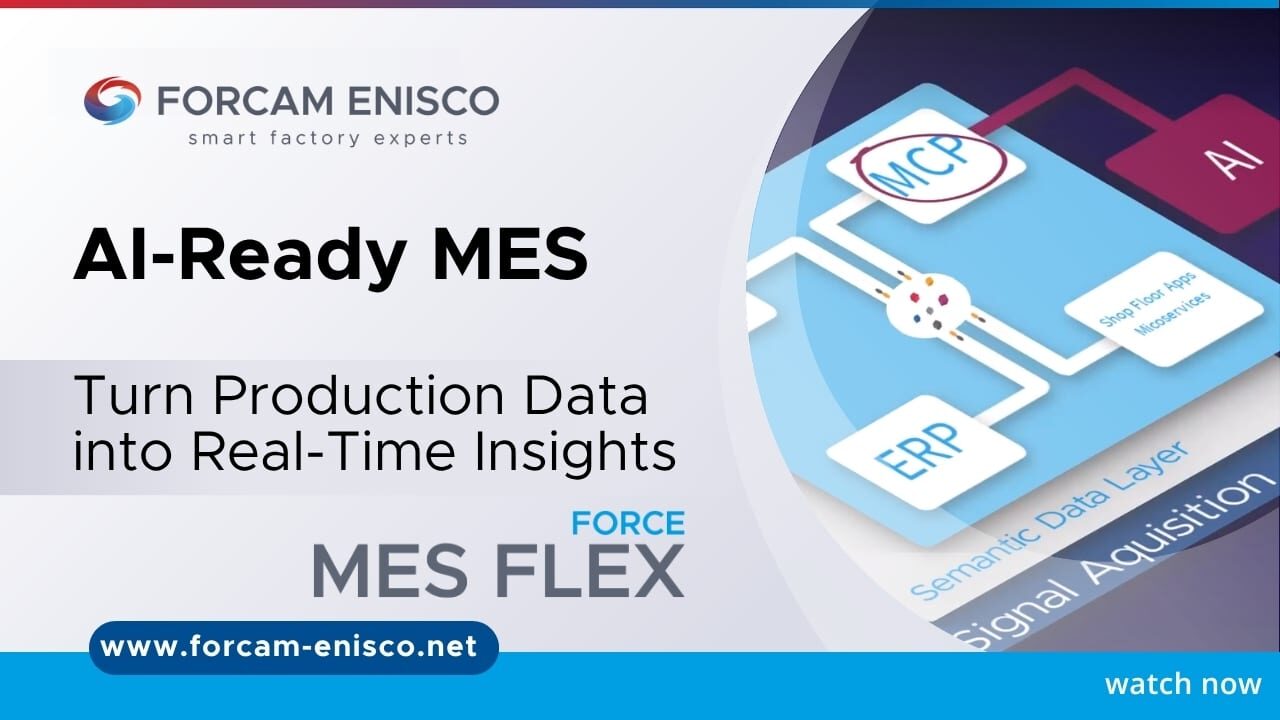
MES FLEX combines machine data acquisition, production context and a semantic data model into an integrated data architecture.

With a unified semantic production data model, MES FLEX lays the foundation for AI-supported applications in manufacturing.

Companies can use this to structure their production data consistently and quickly, and utilise AI-based analyses, assistance systems and automation solutions throughout the entire value chain.

Arrange a demo

What Does “AI-Ready” Mean in Manufacturing?

At its core, artificial intelligence is a mathematical model that transforms input data into results. The quality of these results depends directly on the quality, structure, and contextualization of the data.

To reliably deploy AI in industrial production, three key prerequisites must be met:


Structured Machine Data

Machine signals and sensor data must be consistently captured and transformed into a standardized data structure.

Production Context

Machine data must be linked with manufacturing-related information, such as:

  • Production orders
  • Process steps
  • Quality data
  • Traceability information


Unified Semantic Data Model

Production data must be structured in a way that relationships between machines, events, and production processes can be clearly interpreted.

MES FLEX combines these three elements within an integrated data architecture.


Architecture for AI-Enabled Production with MES FLEX

A modern production environment requires a clear data architecture that connects machines, production systems, and enterprise applications.

MES FLEX captures machine signals directly on the shop floor and transforms them into structured production events. These events can then be forwarded to various systems, such as MES, maintenance, or analytics platforms.


Semantic Data Model

All generated events follow a unified semantic data model.
Each event contains defined information such as:

  • Machine
  • Event type
  • Timestamp
  • Measured value
  • Production context

This structure enables consistent interpretation of production data across machines and systems.


Cross-System Data Integration

The semantic event stream can be distributed simultaneously to multiple IT systems, including:

  • MES systems
  • Maintenance systems
  • ERP systems
  • Shopfloor applications
  • Analytics platforms

Since all systems are based on the same semantic data model, data can be linked and analyzed seamlessly across systems.


AI-Powered Manufacturing Chat Based on MES FLEX Production Data

Production managers and shop floor employees can ask questions about manufacturing processes directly in natural language—without searching through reports or navigating complex dashboards.

This allows relevant production insights to be retrieved quickly and easily.

Examples of Typical Questions:

  • How many parts were produced for order 4711 on machine M17?
  • What was the scrap rate?
  • Were there an unusually high number of machine downtimes today?
  • How does the failure rate compare to the past four weeks?

The AI accesses structured production data within MES FLEX, analyzes relevant information, and provides immediate results—either in natural language or as visual analytics.

This makes production data easier to understand and enables faster, more informed decision-making.

Importance of a Semantic Data Model

The semantic data model of MES FLEX ensures that production events are consistently described across all machines and systems.

This allows AI applications to reliably analyze production data, identify relationships, and deliver precise, understandable insights to users.

Standardized Access to Production Data for AI

For AI systems to analyze production data, they require standardized access to various data sources.

A common approach is the use of a Model Context Protocol (MCP) server.

This acts as a standardized interface through which AI models can retrieve data from different IT systems.

Using an MCP server, data from the following systems can be combined:

  • MES FLEX
  • Shopfloor applications
  • Maintenance systems
  • ERP systems

This enables AI applications to access production information across systems.


Smart Data Instead of Big Data

Successful AI projects do not necessarily require more data—but better structured data.

MES FLEX follows exactly this approach.

Key Principles for AI-Ready Production Data:


  • Early enrichment of data with meaning

  • Data acquisition as close to the machine as possible

  • Use of a unified semantic data model

  • Simplified data structures

MES FLEX as the Foundation for AI in Manufacturing

MES FLEX provides the foundation for the successful use of AI in production.

Artificial intelligence is considered one of the most important levers for optimizing industrial manufacturing. In practice, however, AI projects often fail not because of algorithms, but due to the quality and structure of available production data.

AI can only generate insights from the information it receives. If production data is incomplete, inconsistent, or lacks context, even the most powerful AI models cannot deliver reliable results.

Machine signals are transformed into structured production events and organized within a unified semantic data model. This creates a consistent, contextualized data foundation that can be reliably analyzed and interpreted by AI systems.


We invite you to a personal demo session

You are currently seeing a placeholder content of Microsoft Dynamics CRM. To access the actual content, click on the button below. Please note that data will be passed on to third-party providers.

More information

FAQ