

Track and Trace: End-to-End Process Traceability with MES FLEX
What components are in this product? On which machine, with which parameters, and by whom was it manufactured? MES FLEX seamlessly links batches, serial numbers, and process data—from raw materials to the final product.
Traceability is far more than a regulatory requirement. In the event of a complaint, it determines whether you isolate a single batch or recall an entire production run. And in day-to-day operations, it provides the data you need to identify the causes of errors and improve processes.
Why Traceability Is Critical
- Quality Assurance: Immediately identify the cause of a defect and prevent it from spreading
- Regulatory Compliance: In industries such as automotive, medical technology, and food, traceability is mandatory and strictly regulated
- Risk Management: Quickly isolate affected batches during a recall, reduce costs, and protect the brand
- Competitive Advantage: Customers increasingly demand documented transparency and reliability
How Track and Trace Works
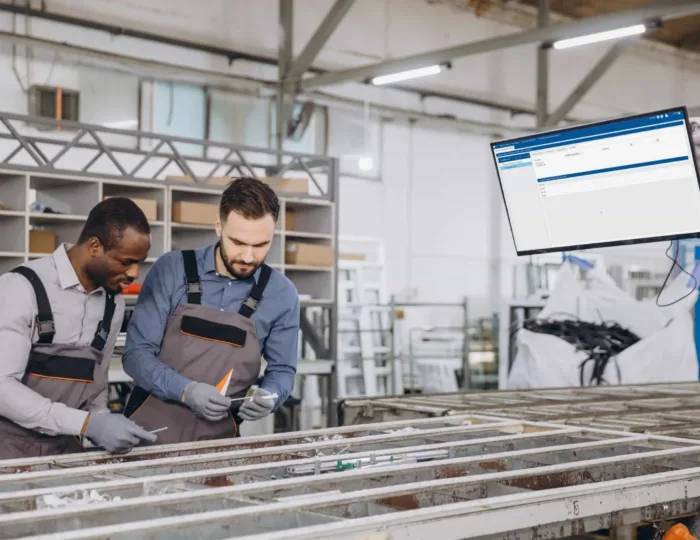
MES FLEX uses event-driven data collection: Data is recorded precisely when something happens—such as when a machine starts or stops, when a parameter changes, or during a quality inspection.
1. Data Collection
Relevant process data such as batch numbers, processing time, machine number, and operator ID are collected on an event-driven basis and linked to the respective product or component.
2. Data Linking
MES FLEX creates a digital twin of the product and links it to all relevant process data and documents, such as test certificates or work instructions.
3. Traceability
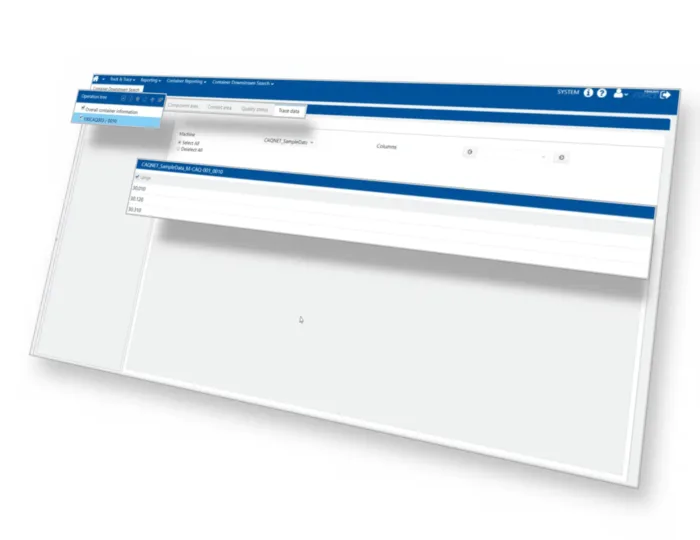
In the event of a complaint or a quality issue, you can trace the entire history seamlessly: which components were installed, when and where the product was manufactured, which machines and parameters were used, and which quality controls were performed.
Special Features
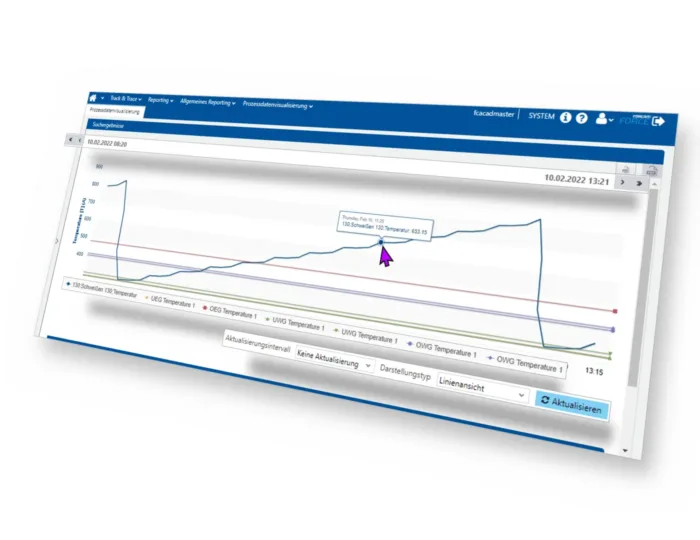
- Process data acquisition and visualization
- Batch and individual part reporting
- Upstream tracing to identify sources of error
- Component section with detailed information on each component
Your Benefits with Track and Trace
MES FLEX has a modular design, integrates easily into existing ERP systems, and is particularly well-suited for order-based and small-batch production involving many product variants.
-
Transparency
Throughout the entire manufacturing process
-
Faster Root Cause Analysis
Pinpoint quality issues in minutes instead of spending days on manual research
-
Compliance
Comply with legal requirements for traceability
-
Better Customer Communication
Detailed Information in the Event of a Complaint
-
Kontinuierliche Verbesserung
Wiederkehrende Muster bei Fehlern, Stillständen und Qualitätsschwankungen erkennen
-
Nachhaltige Produktion
Weniger Ausschuss und mehr Ressourceneffizienz
What is traceability?
Traceability describes the ability to document a product’s lifecycle from its creation to the present—and vice versa—in a way that can be verified. Where do raw materials and individual parts come from? Which production facilities and machines were involved? Put simply, it’s about providing precise answers to the questions “Where does this come from?” and “Where is it going?”
How does digital traceability work?
- Unique identification: Each component is assigned a unique identifier, such as a serial number, lot number, or barcode
- Documentation: All relevant information throughout the lifecycle is recorded
- Linking: The data is linked together to enable end-to-end traceability
- Database: The information is stored and can be retrieved and analyzed at any time and greater resource efficiency
Frequently Asked Questions About Traceability
What is the difference between traceability and track and trace?
These terms are often used interchangeably. Strictly speaking, “tracking” refers to forward tracking—where is a product, and where was it shipped? “Tracing” refers to backward tracking—what was it made of, and how was it manufactured?
What is upstream tracing?
With upstream tracing, you trace a product backward to its components, batches, and process steps. This allows you to identify the source of a defect and pinpoint the affected products.
What data does MES FLEX store for traceability?
Among other things, batch and serial numbers, processing times, machines, operators, process parameters, inspection results, and related documents such as inspection certificates.
What is event-driven data collection?
Data is not collected at fixed intervals, but only when a relevant event occurs. This reduces data traffic and resource consumption and improves data quality.

Know exactly what’s affected in an emergency
Batches, serial numbers, and process data are seamlessly linked and documented in an audit-proof manner. We’ll show you how Track and Trace works in your manufacturing process with MES FLEX.
Practical Knowledge on Track and Trace
Technical articles, webinars, and success stories on traceability, batch tracking, and quality assurance with MES FLEX.
Keine Inhalte gefunden.
