

Energy Monitoring with MES FLEX: Energy Consumption per Machine, Order, and Unit
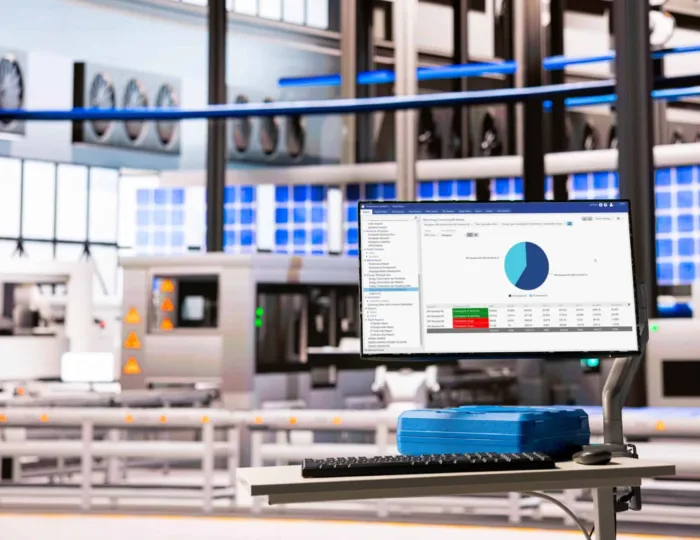
Energy becomes a measurable metric: MES FLEX tracks electricity, gas, steam, compressed air, and water directly at machines, production lines, and orders—and shows you where energy is being wasted and how much a product actually consumes.
Rising energy prices, CO₂ targets, and increasing reporting requirements are turning energy consumption into a competitive factor. With the integrated energy monitoring module in MES FLEX, you can link consumption data to operating states and jobs. This allows you to reduce costs precisely where it pays off.
How to Reduce Your Energy Consumption
-
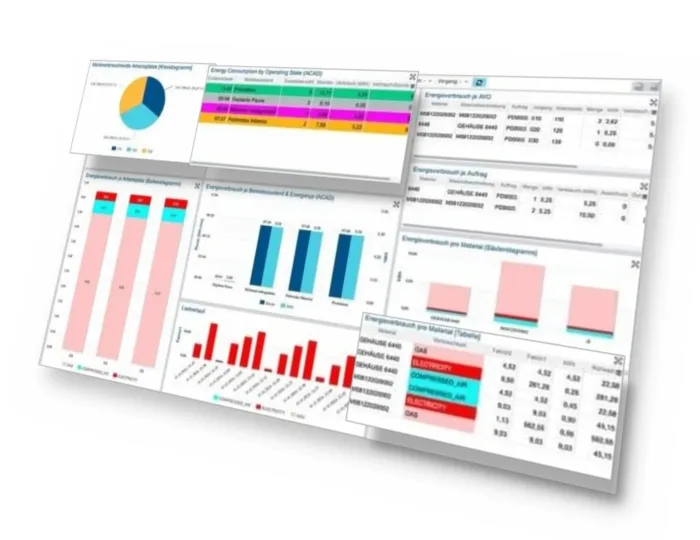
Identify consumption during unproductive periods
MES FLEX combines your machines' operational data with energy consumption data. This allows you to identify waste caused by idle equipment and make clear decisions
-
Actual consumption per order
Real-time data on operations and unit counts show the actual energy consumption per process and per unit. This allows you to accurately and objectively determine a product’s energy and carbon footprint
-
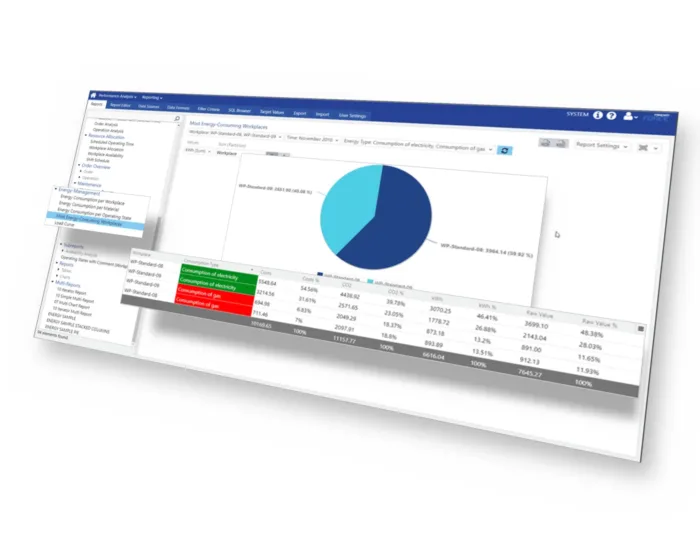
A View of Every Workstation
Consumption of utilities such as electricity, gas, and water per workstation or group of workstations—over the course of a day to a year and converted to the common unit of kWh
Integrating Energy into OEE and CIP
Measuring is the first step—what you do with the data is what matters most. In MES FLEX, energy data is linked to production, downtime, line speed, and quality results:
- Uncover hidden waste such as idle time, startup spikes, or unnecessary consumption
- Calculate actual energy consumption per product, line, or batch
- Provide executives with an integrated view of people, machines, and energy
This turns energy into a strategic KPI—on par with availability, productivity, and quality.
Manufacturer-independent and eligible for funding
Connect sensors independently of the manufacturer
Using the connectivity options in MES FLEX, you can connect various sensor protocols, such as Schneider Box, Smart ECO BOX, WAGO, Modbus, or MQTT.
Take Advantage of Funding
FORCAM ENISCO’s IT solutions for energy and resource efficiency have been included by the Federal Office for Economic Affairs and Export Control (BAFA) in the list of eligible energy management software. The certification was conducted by GUTcert. The test report highlights, among other things:
- Continuous recording of relevant process data such as energy, water, pressure, and temperature
- Reports for employees and management showing how efficiently machines are being used and where savings are possible
- Documentation of absolute consumption per operating state for individual consumers and consumer groups
- Manufacturer-independent data collection, geared toward the IoT world
Energy Monitoring in Practice
Five Steps to Energy Monitoring
- Set goals and define system requirements
- Identify relevant measurement points in the production process
- Install sensors and meters and connect them to MES FLEX
- Consolidate data, analyze it, and visualize it in reports
- Develop and implement measures to increase energy efficiency
Typical Applications
- Metalworking: Furnaces, presses, and welding equipment
- Plastics processing: Injection molding machines and extruders
- Food industry: refrigeration systems, ovens, and packaging machines
Data for Audits, ESG, and Reports
MES FLEX does not replace official reports, but it provides the reliable, structured, and historical data you need for them:
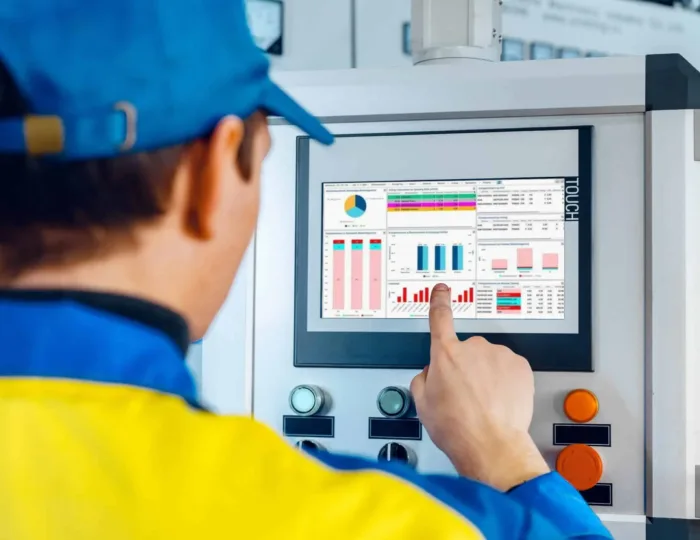
- Consolidated dashboards support the creation of your energy documentation
- The data facilitates compliance with national and international regulations
- It forms a basis for ISO 50001, ISO 14001, and sustainability reports in accordance with CSRD
What is energy monitoring?
Energy monitoring is the systematic collection, analysis, and evaluation of energy consumption. The goal is to create transparency regarding energy flow, identify potential savings, and sustainably increase energy and resource efficiency. In production, energy monitoring primarily pursues the following goals:
- Reduce costs: Improvement measures reduce consumption and energy costs
- Produce more sustainably: Use resources efficiently and reduce the ecological footprint
- Create transparency: Record consumption of electricity, gas, water, compressed air, and other energy sources in detail
- Identify potential savings: for example, through optimized machine parameters or the replacement of outdated technology
- Improve energy management: Make informed decisions for a future-proof energy supply
Frequently Asked Questions About Energy Monitoring
Is energy monitoring with MES FLEX eligible for funding?
FORCAM ENISCO’s IT solutions for energy and resource efficiency are included on the BAFA list of eligible energy management software. We would be happy to advise you on current funding opportunities.
Which energy sources can MES FLEX track?
Electricity, gas, steam, compressed air, and water. In addition, process variables such as temperature or pressure can be recorded.
How do I calculate a product’s carbon footprint?
MES FLEX displays the actual energy consumption per order, production step, and unit. This data forms the basis for calculating a product’s energy and carbon footprint.
Does MES FLEX support ISO 50001?
MES FLEX provides structured and historical consumption data that serves as the basis for an energy management system in accordance with ISO 50001.

Allocate Energy Consumption Based on the Source
Analyze consumption data by order, machine, or time period, and optimize your operations in a targeted manner. We’ll show you how this works with MES FLEX—and advise you on funding opportunities.
Practical Knowledge on Energy Monitoring
Technical articles, webinars, and success stories on energy efficiency, carbon footprint, and energy management with MES FLEX.
Keine Inhalte gefunden.
